
How to shut off your water main to prevent flood damage
Knowing how to shut off your water main in Springfield VA stops a burst pipe from becoming a flooded basement. Here is exactly where the valve is and how to turn it.
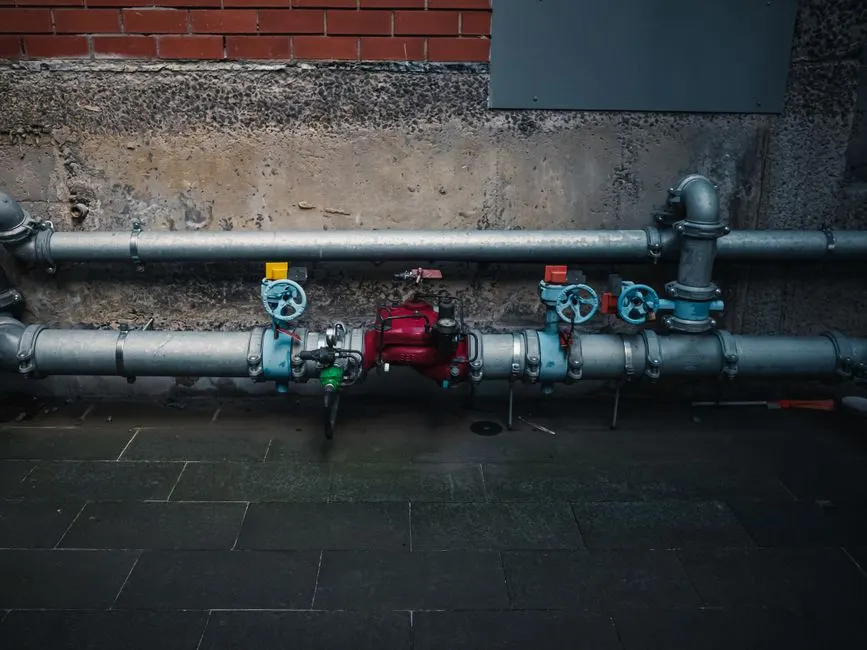
To shut off your water main in Springfield VA, find the main shut off valve - usually in the basement, crawl space, or a utility closet near the front wall - and turn the handle clockwise until it stops. That single move cuts the water supply to every faucet, toilet, and appliance in the house, which is the fastest way to stop a burst pipe from turning into a flooded first floor. This guide covers where the valve is in Springfield homes, what tools you need, the exact steps, and when it is time to call us instead of doing it yourself.
How do I shut off my water main in Springfield VA?
You shut off the water main by turning the main valve clockwise until it stops - a quarter turn for a ball valve, or several full turns for a gate valve. The valve sits on the main supply line where it enters your home, before any branch lines split off to fixtures. In most Springfield houses built from the 1960s through the 1990s, that entry point is on the front wall of the basement or in the crawl space directly below the first-floor bathroom.
Knowing how to shut off water main Springfield VA is the difference between a $200 repair and a $12,000 insurance claim. The average burst supply line releases 4 to 8 gallons per minute. In a finished basement, that is two inches of standing water in under an hour.
If you rent, ask the landlord where the main valve is before you need it. If you own, walk down and look at it today. The valve you cannot find at 2 a.m. is the one that floods your house.
Where is the water main shut off valve in Springfield Virginia homes?
The water main shut off valve in a Springfield Virginia home is almost always on the wall closest to the street, because that is where the municipal service line enters. In neighborhoods like West Springfield Water Damage Restoration, where most homes have full basements, the valve is on the front foundation wall, often behind a removable panel or tucked beside the water heater.
In Water Damage Restoration in North Springfield, many houses sit on slabs or crawl spaces, so the valve is under the access hatch or in a utility closet near the kitchen. If you cannot find it inside, check the exterior wall facing the street for a covered box - that is the curb stop, owned by Fairfax Water, and you should not touch it unless the inside valve has failed.
Here is where to look, in order:
- Basement front wall, within 3 feet of where the pipe comes through the foundation.
- Crawl space hatch, directly below the main bathroom.
- Utility closet or laundry room on the street-facing side of the house.
- Garage wall, if the service line enters there.
- Exterior curb box near the sidewalk - last resort only.
Older Springfield homes sometimes have two valves: one at the meter and one where the line enters the house. The one inside is the one you control.
What tools you need for an emergency water main shut off
Water main shut off tools Springfield Virginia homeowners should keep within arm's reach of the valve are simple: a adjustable wrench, a pair of channel-lock pliers, and a flathead screwdriver. Ball valves turn by hand, but gate valves often need a wrench after years of mineral buildup. A valve that has not moved since 2009 will not move easily in 2026.
Keep a small plastic bin next to the valve with:
- Adjustable wrench (10-inch minimum)
- Channel-lock pliers
- Flashlight and spare batteries
- Tag or marker to label the valve
- Old towel for the drip that always follows
If your valve is a round wheel, it is a gate valve - turn it clockwise several full turns. If it is a lever, it is a ball valve - a quarter turn clockwise stops the flow. Test it twice a year. A valve that will not close is a valve that will fail you in an emergency.
Step-by-step: shutting off the main valve
Shutting off the main valve takes less than a minute once you know the sequence. Follow these steps in order, and do not skip the last one.
- Turn off the water heater. If it is gas, set the dial to pilot. If electric, flip the breaker. A dry tank with a live burner cracks the heat exchanger.
- Locate the valve using the spots above. If you have to move a box or panel, move it now and leave it accessible.
- Turn clockwise until it stops. For a ball valve, that is a quarter turn. For a gate valve, keep turning until you feel resistance - do not force it past that point.
- Open the lowest faucet in the house - usually a basement sink or laundry tub - to drain pressure from the lines.
- Check the meter. If the dial is still spinning, the valve is not fully closed. Turn it another quarter turn.
If the valve handle spins freely without stopping the water, the stem is stripped. That is a job for a plumber, not a bigger wrench.
Common mistakes that turn a drip into a flood
The most common mistake is waiting to shut off the water because you want to find the leak first. Water damage compounds by the minute. Shut the main off, then find the source. A dry floor buys you time to diagnose.
Other mistakes we see on calls across Springfield:
- Turning the valve the wrong way. Clockwise closes. Counter-clockwise opens. If the water gets stronger, you turned it the wrong direction.
- Forcing a stuck valve. A snapped stem means water at full pressure until Fairfax Water can shut the curb stop - often 45 minutes or more.
- Forgetting the water heater. A dry tank heated to 400°F cracks the glass lining. That is a $1,200 replacement on top of the flood cleanup.
- Not draining the lines. Residual pressure in the pipes still pushes water out of the leak. Open the lowest faucet.
- Ignoring the irrigation system. Outdoor spigots and sprinkler lines hold water after the main is off. If the leak is outside, shut the irrigation backflow valve too.
One more: never leave the main valve half-closed. A partially closed gate valve can chatter and wear the seat, which turns a one-time emergency into a permanent drip.
What to do after shutting off the water main
After shutting off the water main, your first job is to get standing water out of the house before it wicks into drywall and baseboards. Water migrates up drywall at about 1 inch per hour. After 24 hours, that wall is a mold colony.
Start with these steps:
- Photograph everything for the insurance claim before you move it.
- Pull wet rugs and furniture off the floor.
- Use a wet/dry vacuum or towels to remove standing water.
- Run fans and a dehumidifier if you have them.
- Call a restoration company if the water reached drywall, carpet pad, or the basement ceiling.
If the water came from a sewage backup, do not touch it without PPE. That is a biohazard, and it needs professional sewage backup cleanup Springfield VA - not a mop and a bucket.
For clean-water leaks that soaked carpet or drywall, our water damage repair Springfield VA team extracts the water, sets drying equipment, and tests moisture levels before we close the job. We handle everything from basement water extraction Springfield VA to full structural drying.
When to call a professional
Call a professional when the valve will not close, when the leak is behind a wall, or when water has been sitting for more than a few hours. Those three situations cover 90% of the calls we run in Springfield.
Signs you should stop and call us:
- The main valve is stuck, stripped, or will not stop the flow.
- Water is coming through the ceiling, floor, or foundation wall.
- The leak is from a sewage line or has a dark, foul smell.
- You see buckling hardwood, sagging drywall, or a musty odor.
- The water has been standing for more than 12 hours.
Springfield Water Damage Pros handles emergency water removal, structural drying, mold inspection, and full repairs. We are local, we know these neighborhoods, and we can be on-site the same day.
Frequently Asked Questions
How do I shut off my water main in Springfield VA?
Turn the main valve clockwise until it stops - a quarter turn for a ball valve, several full turns for a gate valve. The valve is on the supply line where it enters your home, usually in the basement or crawl space on the street-facing wall.
Where is the water main shut off valve in a Springfield Virginia home?
In most Springfield homes, it is on the front foundation wall in the basement, or in the crawl space directly below the main bathroom. In slab homes, check the utility closet or garage wall near the street. If you cannot find it inside, the curb stop is near the sidewalk.
Can shutting off the water main prevent flood damage in Springfield VA?
Yes. Shutting off the main stops the supply of water to a burst pipe or failed appliance, which limits the flood to the water already in the lines - usually a few gallons instead of hundreds. It is the single most effective step you can take in the first minute of a leak.
Who do I call after shutting off my water main in Springfield VA?
Call a licensed plumber to repair the pipe, and call a water damage restoration company if the water reached drywall, carpet, or the basement ceiling. Springfield Water Damage Pros handles extraction, drying, and repairs - reach us at +1 866-658-4281.
How often should I test my water main shut off in Springfield Virginia?
Test it twice a year - once in spring and once in fall. Turn it a quarter turn and back, or fully close and reopen it. Valves that sit unused for years seize up, and a seized valve is useless in an emergency.
Get help with Water Damage Restoration in Springfield
If your water main is stuck, your basement is wet, or you are not sure what to do next, call Springfield Water Damage Pros. We handle emergency water removal, drying, and full repairs across Springfield and the surrounding neighborhoods.
Call us now at +1 866-658-4281 - we are available 24/7 for water emergencies in Springfield VA.